Filters
Question type

Study Flashcards

Using the VSEPR model, what is the predicted molecular geometry of the PCl3 molecule?


A) linear
B) bent
C) trigonal planar
D) trigonal pyramidal
E) tetrahedral

F) A) and B)
G) A) and C)

Correct Answer

verifed

verified

D

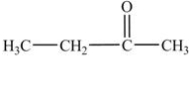
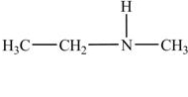
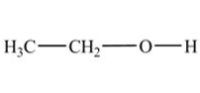
In which of the following compounds will the molecules not form hydrogen bonds with each other? In which of the following compounds will the molecules not form hydrogen bonds with each other?   A)    B)    C)    D)


A) In which of the following compounds will the molecules not form hydrogen bonds with each other?   A)    B)    C)    D)
B) In which of the following compounds will the molecules not form hydrogen bonds with each other?   A)    B)    C)    D)
C) In which of the following compounds will the molecules not form hydrogen bonds with each other?   A)    B)    C)    D)
D) In which of the following compounds will the molecules not form hydrogen bonds with each other?   A)    B)    C)    D)

E) None of the above
F) A) and C)

Correct Answer

verifed

verified

Place the following in order of decreasing electronegativity. Mg Cl F


A) Mg > Cl > F
B) F > Cl > Mg
C) Cl > F > Mg
D) Cl > Mg > F
E) F > Mg > Cl

F) B) and D)
G) D) and E)

Correct Answer

verifed

verified

According to the VSEPR model, the predicted molecular geometry of ammonia, NH3, is


A) linear.
B) trigonal planar.
C) bent.
D) tetrahedral.
E) trigonal pyramidal.

F) B) and E)
G) All of the above

Correct Answer

verifed

verified

What is the molecular geometry of ClF2 as predicted by the VSEPR model?


A) linear
B) bent
C) seesaw
D) T-shaped
E) trigonal bipyramidal

F) B) and E)
G) A) and E)

Correct Answer

verifed

verified

Predict the molecular geometry and polarity of the SO2 molecule.


A) linear, polar
B) linear, nonpolar
C) bent, polar
D) bent, nonpolar
E) trigonal planar, polar

F) A) and B)
G) A) and C)

Correct Answer

verifed

verified

Octane is a component of fuel used in internal combustion engines.The dominant intermolecular forces in octane are


A) dipole-dipole forces.
B) London dispersion forces.
C) hydrogen bonding.
D) covalent bonds.
E) carbon-hydrogen bonds.

F) A) and B)
G) D) and E)

Correct Answer

verifed

verified

Which kinds of intermolecular forces exist between propane molecules? I.dispersion forces II) dipole-dipole interactions Ion-dipole interactions


A) I only
B) II only
C) III only
D) I, II, and III
E) I and III

F) A) and B)
G) C) and E)

Correct Answer

verifed

verified

Which one of the following molecules is nonpolar?


A) NH3
B) OF2
C) CH3Cl
D) H2O
E) BeCl2

F) A) and B)
G) A) and C)

Correct Answer

verifed

verified

The strongest intermolecular interactions between pentane (C5H12) molecules arise from


A) dipole-dipole forces.
B) London dispersion forces.
C) hydrogen bonding.
D) ion-dipole interactions.
E) carbon-carbon bonds.

F) C) and E)
G) B) and D)

Correct Answer

verifed

verified

Which of the following is defined as the attractive forces between polar molecules? I.dispersion forces II) dipole-dipole interactions Ion-dipole interactions


A) I and III
B) II only
C) III only
D) I, II, and III
E) I only

F) C) and D)
G) C) and E)

Correct Answer

verifed

verified

B

How many lone pairs of electrons need to be added to complete this Lewis structure? How many lone pairs of electrons need to be added to complete this Lewis structure?   A) 5 B) 8 C) 6 D) 1 E) 16


A) 5
B) 8
C) 6
D) 1
E) 16

F) C) and D)
G) A) and E)

Correct Answer

verifed

verified

Which of the following pure substances has the strongest dispersion forces?


A) C4H10
B) C5H12
C) C6H14
D) C7H16
E) C8H18

F) B) and C)
G) A) and D)

Correct Answer

verifed

verified

Place the following in order of increasing electronegativity. Se K Cl


A) Cl < Se < K
B) K < Se < Cl
C) K < Cl < Se
D) Se < Cl < K
E) Cl < K < Se

F) C) and D)
G) None of the above

Correct Answer

verifed

verified

Place the following in order of increasing electronegativity. Cs O S


A) O < S < Cs
B) S < O < Cs
C) Cs < S < O
D) Cs < O < S
E) O < Cs < S

F) B) and E)
G) C) and D)

Correct Answer

verifed

verified

Which one of the following pure substances will exhibit hydrogen bonding?


A) CH4
B) H2C=CH2
C) H2O
D) CHCl3
E) CHF3

F) C) and E)
G) None of the above

Correct Answer

verifed

verified

The number of resonance structures for the nitrate ion that satisfy the octet rule is


A) 1.
B) 2.
C) 3.
D) 4.
E) none of these

F) D) and E)
G) A) and D)

Correct Answer

verifed

verified

According to the VSEPR model, the predicted molecular geometry of SiCl4 is


A) linear.
B) trigonal planar.
C) bent.
D) tetrahedral.
E) trigonal pyramidal.

F) B) and D)
G) A) and D)

Correct Answer

verifed

verified

What is the molecular geometry of N2O as predicted by the VSEPR model? What is the molecular geometry of N<sub>2</sub>O as predicted by the VSEPR model?   A) trigonal pyramidal B) trigonal planar C) tetrahedral D) bent E) linear


A) trigonal pyramidal
B) trigonal planar
C) tetrahedral
D) bent
E) linear

F) B) and E)
G) B) and D)

Correct Answer

verifed

verified

Which one of the following pure substance has both dispersion forces and dipole-dipole forces?


A) HCl
B) BCl3
C) Br2
D) H2
E) CO2

F) A) and B)
G) A) and C)

Correct Answer

verifed

verified

A

Showing 1 - 20 of 71

Related Exams

Show Answer