Filters
Question type

Study Flashcards

In an elementary step of a reaction mechanism, the molecularities are determined by ________


A) the reactant concentrations.
B) the stoichiometric coefficients.
C) the product concentrations.
D) experiment.
E) the difference between the forward and reverse rates.

F) B) and D)
G) A) and B)

Correct Answer

verifed

verified

For the following energy profile: a) identify any reaction intermediates, b) identify any transition states, c) state the number of steps, d) state whether the reaction is endo- or exothermic, e) indicate which step is rate determining. For the following energy profile: a) identify any reaction intermediates,  b) identify any transition states,  c) state the number of steps,  d) state whether the reaction is endo- or exothermic,  e) indicate which step is rate determining.

Correct Answer

verifed

verified

a) III is a reaction intermedi...

View Answer

If the rate of the reaction: If the rate of the reaction:   is 0.870 M/s over the first 12.25 s, how much hydrogen sulfide will be consumed during this time? A) 10.66 M B) 21.32 M C) 5.33 M D) 31.98 M E) 3.55 M is 0.870 M/s over the first 12.25 s, how much hydrogen sulfide will be consumed during this time?


A) 10.66 M
B) 21.32 M
C) 5.33 M
D) 31.98 M
E) 3.55 M

F) A) and B)
G) A) and E)

Correct Answer

verifed

verified

The following figure shows Arrhenius plots for four different reactions. Which reaction has the largest frequency factor? The following figure shows Arrhenius plots for four different reactions. Which reaction has the largest frequency factor?   A) a B) b C) c D) d


A) a
B) b
C) c
D) d

E) B) and C)
F) All of the above

Correct Answer

verifed

verified

If the rate of formation of ammonia is 0.345 M/s, what is the rate of disappearance of N2? If the rate of formation of ammonia is 0.345 M/s, what is the rate of disappearance of N<sub>2</sub>?   A) 0.173 M/s B) 0.345 M/s C) 0.690 M/s D) 245 M/s E) 0.518 M/s


A) 0.173 M/s
B) 0.345 M/s
C) 0.690 M/s
D) 245 M/s
E) 0.518 M/s

F) A) and C)
G) A) and E)

Correct Answer

verifed

verified

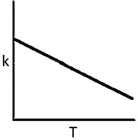
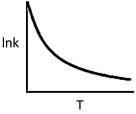
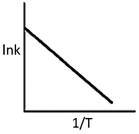
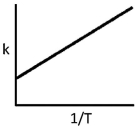
Which plot would provide the activation energy for a reaction?


A) Which plot would provide the activation energy for a reaction? A)    B)    C)    D)
B) Which plot would provide the activation energy for a reaction? A)    B)    C)    D)
C) Which plot would provide the activation energy for a reaction? A)    B)    C)    D)
D) Which plot would provide the activation energy for a reaction? A)    B)    C)    D)

E) All of the above
F) None of the above

Correct Answer

verifed

verified

One reaction that occurs in an automobile catalytic converter is the conversion of nitrogen monoxide to nitrogen and oxygen. How is the rate of this reaction related to the rate at which the concentration of a reactant or product changes? 2NO(g) →N2(g) O2(g) I. Rate One reaction that occurs in an automobile catalytic converter is the conversion of nitrogen monoxide to nitrogen and oxygen. How is the rate of this reaction related to the rate at which the concentration of a reactant or product changes? 2NO(g)  →N<sub>2</sub>(g)  <font face= symbol ></font> O<sub>2</sub>(g)  I. Rate <font face= symbol ></font>   <font face= symbol ></font> II. Rate <font face= symbol ></font>   <font face= symbol ></font> III. Rate <font face= symbol ></font>  <font face= symbol ></font>IV. Rate <font face= symbol ></font>   <font face= symbol ></font> A) I only B) II only C) III and IV only D) I, III, and IV only E) II, III, and IV only II. Rate One reaction that occurs in an automobile catalytic converter is the conversion of nitrogen monoxide to nitrogen and oxygen. How is the rate of this reaction related to the rate at which the concentration of a reactant or product changes? 2NO(g)  →N<sub>2</sub>(g)  <font face= symbol ></font> O<sub>2</sub>(g)  I. Rate <font face= symbol ></font>   <font face= symbol ></font> II. Rate <font face= symbol ></font>   <font face= symbol ></font> III. Rate <font face= symbol ></font>  <font face= symbol ></font>IV. Rate <font face= symbol ></font>   <font face= symbol ></font> A) I only B) II only C) III and IV only D) I, III, and IV only E) II, III, and IV only III. Rate One reaction that occurs in an automobile catalytic converter is the conversion of nitrogen monoxide to nitrogen and oxygen. How is the rate of this reaction related to the rate at which the concentration of a reactant or product changes? 2NO(g)  →N<sub>2</sub>(g)  <font face= symbol ></font> O<sub>2</sub>(g)  I. Rate <font face= symbol ></font>   <font face= symbol ></font> II. Rate <font face= symbol ></font>   <font face= symbol ></font> III. Rate <font face= symbol ></font>  <font face= symbol ></font>IV. Rate <font face= symbol ></font>   <font face= symbol ></font> A) I only B) II only C) III and IV only D) I, III, and IV only E) II, III, and IV onlyIV. Rate One reaction that occurs in an automobile catalytic converter is the conversion of nitrogen monoxide to nitrogen and oxygen. How is the rate of this reaction related to the rate at which the concentration of a reactant or product changes? 2NO(g)  →N<sub>2</sub>(g)  <font face= symbol ></font> O<sub>2</sub>(g)  I. Rate <font face= symbol ></font>   <font face= symbol ></font> II. Rate <font face= symbol ></font>   <font face= symbol ></font> III. Rate <font face= symbol ></font>  <font face= symbol ></font>IV. Rate <font face= symbol ></font>   <font face= symbol ></font> A) I only B) II only C) III and IV only D) I, III, and IV only E) II, III, and IV only


A) I only
B) II only
C) III and IV only
D) I, III, and IV only
E) II, III, and IV only

F) A) and C)
G) A) and E)

Correct Answer

verifed

verified

In a first-order reaction, the initial concentration of A is 0.40 M. What is the concentration of A after 15 seconds if the half-life of the reaction is 3 seconds?

Correct Answer

verifed

verified

1.3 F1F1F1...

View Answer

If the rate of formation of nitrogen monoxide is 0.413 M/s, what is the rate of disappearance of SO2? If the rate of formation of nitrogen monoxide is 0.413 M/s, what is the rate of disappearance of SO<sub>2</sub>?   A) 0.207 M/s B) 0.280 M/s C) 0.413 M/s D) 0.620 M/s E) 1.24 M/s


A) 0.207 M/s
B) 0.280 M/s
C) 0.413 M/s
D) 0.620 M/s
E) 1.24 M/s

F) A) and B)
G) B) and C)

Correct Answer

verifed

verified

D

HI dissociates to form I2 and H2: HI dissociates to form I<sub>2</sub> and H<sub>2</sub>:   If the concentration of HI changes at a rate of <font face= symbol ></font>0.45 M/s, what is the rate of appearance of I<sub>2</sub>(g) ? A) 0.90 M/s B) 0.45 M/s C) 0.23 M/s D) 1.00 M/s E) 0.13 M/s If the concentration of HI changes at a rate of 0.45 M/s, what is the rate of appearance of I2(g) ?


A) 0.90 M/s
B) 0.45 M/s
C) 0.23 M/s
D) 1.00 M/s
E) 0.13 M/s

F) B) and D)
G) None of the above

Correct Answer

verifed

verified

The rate law of a particular reaction was determined to be Rate k. What is the unit of the rate constant for the reaction?


A) M/s
B) 1/(Ms)
C) 1/(Ms2)
D) 1/s
E) Ms

F) C) and E)
G) A) and B)

Correct Answer

verifed

verified

A

For the reaction 2A For the reaction 2A   <font face= symbol ></font>4B <font face= symbol ></font> 3D, the rate of the reaction in terms of <font face= symbol ></font>B would be written as ________ A) (<font face= symbol ></font>   <font face= symbol ></font>)  B) (<font face= symbol ></font>   <font face= symbol ></font>)  C) (<font face= symbol ></font><font face= symbol ></font>   <font face= symbol ></font>   <font face= symbol ></font>)  D) (+   <font face= symbol ></font>   <font face= symbol ></font>)  E) (<font face= symbol ></font>   <font face= symbol ></font>) 4B 3D, the rate of the reaction in terms of B would be written as ________


A) ( For the reaction 2A   <font face= symbol ></font>4B <font face= symbol ></font> 3D, the rate of the reaction in terms of <font face= symbol ></font>B would be written as ________ A) (<font face= symbol ></font>   <font face= symbol ></font>)  B) (<font face= symbol ></font>   <font face= symbol ></font>)  C) (<font face= symbol ></font><font face= symbol ></font>   <font face= symbol ></font>   <font face= symbol ></font>)  D) (+   <font face= symbol ></font>   <font face= symbol ></font>)  E) (<font face= symbol ></font>   <font face= symbol ></font>) )
B) ( For the reaction 2A   <font face= symbol ></font>4B <font face= symbol ></font> 3D, the rate of the reaction in terms of <font face= symbol ></font>B would be written as ________ A) (<font face= symbol ></font>   <font face= symbol ></font>)  B) (<font face= symbol ></font>   <font face= symbol ></font>)  C) (<font face= symbol ></font><font face= symbol ></font>   <font face= symbol ></font>   <font face= symbol ></font>)  D) (+   <font face= symbol ></font>   <font face= symbol ></font>)  E) (<font face= symbol ></font>   <font face= symbol ></font>) )
C) ( For the reaction 2A   <font face= symbol ></font>4B <font face= symbol ></font> 3D, the rate of the reaction in terms of <font face= symbol ></font>B would be written as ________ A) (<font face= symbol ></font>   <font face= symbol ></font>)  B) (<font face= symbol ></font>   <font face= symbol ></font>)  C) (<font face= symbol ></font><font face= symbol ></font>   <font face= symbol ></font>   <font face= symbol ></font>)  D) (+   <font face= symbol ></font>   <font face= symbol ></font>)  E) (<font face= symbol ></font>   <font face= symbol ></font>) For the reaction 2A   <font face= symbol ></font>4B <font face= symbol ></font> 3D, the rate of the reaction in terms of <font face= symbol ></font>B would be written as ________ A) (<font face= symbol ></font>   <font face= symbol ></font>)  B) (<font face= symbol ></font>   <font face= symbol ></font>)  C) (<font face= symbol ></font><font face= symbol ></font>   <font face= symbol ></font>   <font face= symbol ></font>)  D) (+   <font face= symbol ></font>   <font face= symbol ></font>)  E) (<font face= symbol ></font>   <font face= symbol ></font>) )
D) (+ For the reaction 2A   <font face= symbol ></font>4B <font face= symbol ></font> 3D, the rate of the reaction in terms of <font face= symbol ></font>B would be written as ________ A) (<font face= symbol ></font>   <font face= symbol ></font>)  B) (<font face= symbol ></font>   <font face= symbol ></font>)  C) (<font face= symbol ></font><font face= symbol ></font>   <font face= symbol ></font>   <font face= symbol ></font>)  D) (+   <font face= symbol ></font>   <font face= symbol ></font>)  E) (<font face= symbol ></font>   <font face= symbol ></font>) For the reaction 2A   <font face= symbol ></font>4B <font face= symbol ></font> 3D, the rate of the reaction in terms of <font face= symbol ></font>B would be written as ________ A) (<font face= symbol ></font>   <font face= symbol ></font>)  B) (<font face= symbol ></font>   <font face= symbol ></font>)  C) (<font face= symbol ></font><font face= symbol ></font>   <font face= symbol ></font>   <font face= symbol ></font>)  D) (+   <font face= symbol ></font>   <font face= symbol ></font>)  E) (<font face= symbol ></font>   <font face= symbol ></font>) )
E) ( For the reaction 2A   <font face= symbol ></font>4B <font face= symbol ></font> 3D, the rate of the reaction in terms of <font face= symbol ></font>B would be written as ________ A) (<font face= symbol ></font>   <font face= symbol ></font>)  B) (<font face= symbol ></font>   <font face= symbol ></font>)  C) (<font face= symbol ></font><font face= symbol ></font>   <font face= symbol ></font>   <font face= symbol ></font>)  D) (+   <font face= symbol ></font>   <font face= symbol ></font>)  E) (<font face= symbol ></font>   <font face= symbol ></font>) )

F) A) and C)
G) D) and E)

Correct Answer

verifed

verified

A scientist conducts an experiment to determine the rate of the following reaction: A scientist conducts an experiment to determine the rate of the following reaction:   If the initial concentration of NO<sub>2</sub> was 0.250 M and the concentration of NO<sub>2</sub> was 0.200 M after 0.200 s, what is the average rate of the reaction? If the initial concentration of NO2 was 0.250 M and the concentration of NO2 was 0.200 M after 0.200 s, what is the average rate of the reaction?

Correct Answer

verifed

verified

Given the following data for the reaction A B, determine the activation energy, Ea, of the reaction. k (M/s) T (K) 2.04 104 250 6.78 103 400

Correct Answer

verifed

verified

The linear form of the Arrhenius equation is very useful, as a plot of ________ versus ________ allows us to calculate the activation energy from the slope and the frequency factor from the intercept.

Correct Answer

verifed

verified

A scientist conducts an experiment to determine the rate of NO formation in the reaction: A scientist conducts an experiment to determine the rate of NO formation in the reaction:   If the initial concentration of N<sub>2</sub> was 0.500 M and the concentration of N<sub>2</sub> was 0.450 M after 0.100 s, what is the average rate of NO formation? A) 0.500 M/s B) 1.00 M/s C) 5.00 M/s D) 10.0 M/s E) 0.250 M/s If the initial concentration of N2 was 0.500 M and the concentration of N2 was 0.450 M after 0.100 s, what is the average rate of NO formation?


A) 0.500 M/s
B) 1.00 M/s
C) 5.00 M/s
D) 10.0 M/s
E) 0.250 M/s

F) None of the above
G) A) and E)

Correct Answer

verifed

verified

Given the following data for the reaction A Given the following data for the reaction A   <font face= symbol ></font>B, determine the activation energy, E<sub>a</sub>, of the reaction. k (M/s)  T (K)  0) 730 250 0) 739 450 A) 54.4 J/mol B) 6.89 J/mol C) 39.9 J/mol D) 57.3 J/mol E) 374 J/mol B, determine the activation energy, Ea, of the reaction. k (M/s) T (K) 0) 730 250 0) 739 450


A) 54.4 J/mol
B) 6.89 J/mol
C) 39.9 J/mol
D) 57.3 J/mol
E) 374 J/mol

F) A) and B)
G) A) and C)

Correct Answer

verifed

verified

The order in which ozone, nitrogen monoxide, and nitrogen dioxide build up in the atmosphere over the course of the day is ________, then ________, then ________.


A) NO; NO2; O3
B) NO; O3; NO2
C) NO2; NO; O3
D) NO2; O3; NO
E) O3; NO; NO2

F) C) and D)
G) A) and B)

Correct Answer

verifed

verified

A

The rate at which popcorn pops was measured at two different temperatures. How many times faster does the popcorn pop at 250°C compared with that at 210°C when the activation energy is 53.8 kJ/mol?


A) 2.8
B) 3.9
C) 140
D) 125
E) 12.7

F) A) and C)
G) B) and D)

Correct Answer

verifed

verified

A proposed mechanism for the decomposition of ozone in the atmosphere is: Step 1: A proposed mechanism for the decomposition of ozone in the atmosphere is: Step 1:   Step 2:   Which of the following species is an intermediate? A) Cl B) O<sub>3</sub> C) ClO D) O<sub>2</sub> E) This mechanism has no intermediates. Step 2: A proposed mechanism for the decomposition of ozone in the atmosphere is: Step 1:   Step 2:   Which of the following species is an intermediate? A) Cl B) O<sub>3</sub> C) ClO D) O<sub>2</sub> E) This mechanism has no intermediates. Which of the following species is an intermediate?


A) Cl
B) O3
C) ClO
D) O2
E) This mechanism has no intermediates.

F) All of the above
G) A) and B)

Correct Answer

verifed

verified

Showing 1 - 20 of 155

Related Exams

Show Answer